Safety
Flat Tyre on Sheikh Zayed Road: What to Do
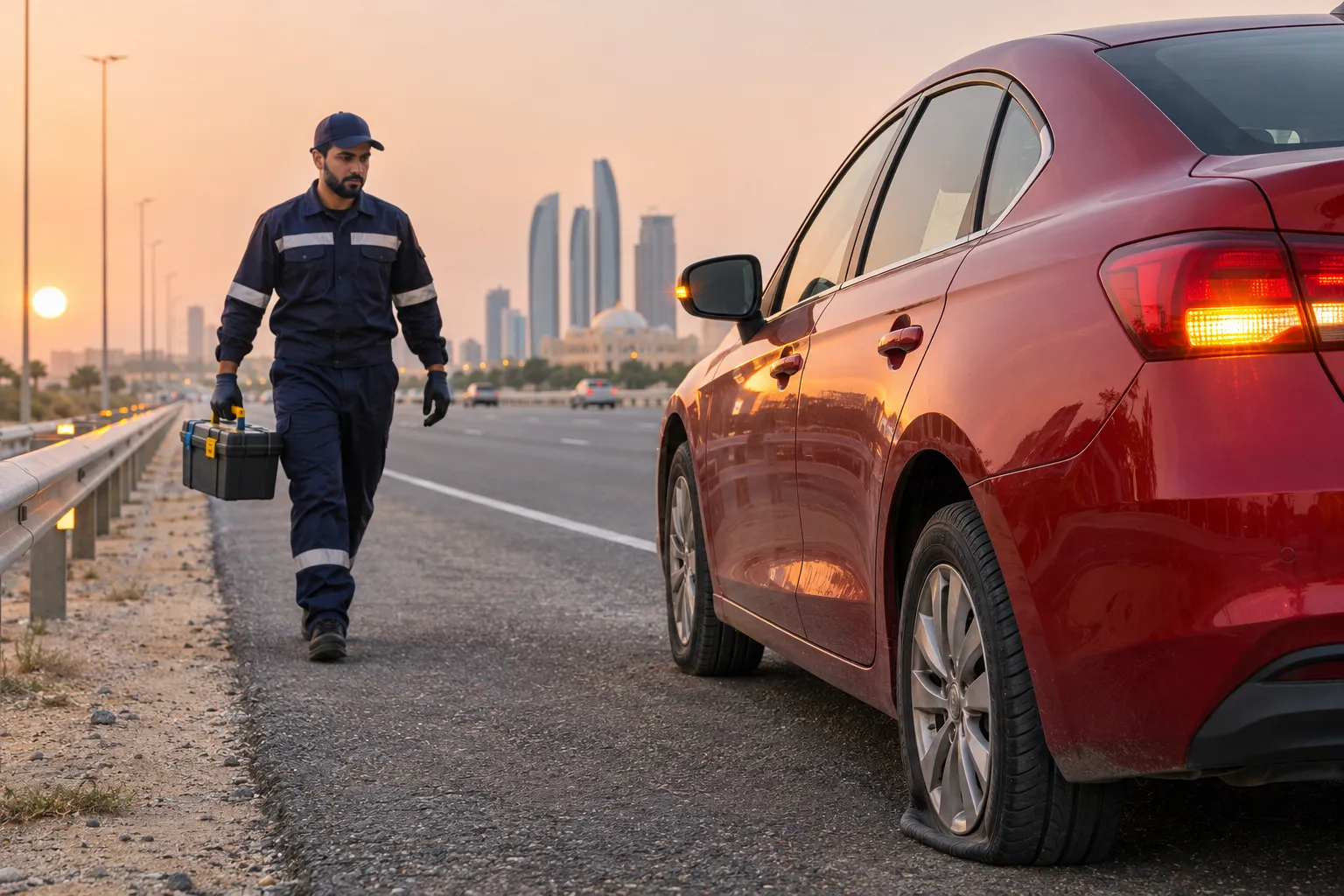
Short answer
If you get a flat tyre on Sheikh Zayed Road, keep a firm grip, ease off without braking hard, signal and move right to the hard shoulder or the next exit, then switch on hazards and wait behind the barrier. Do not change the wheel on the traffic side; call for help, and call 999 if you are stuck in a live lane.
Key takeaways
- Hold the wheel straight and ease off the accelerator; braking hard on a deflating tyre is how cars spin.
- Get to the right-hand hard shoulder or, better, the next exit or petrol station, at low speed with hazards on.
- Get everyone out on the side away from traffic and stand behind the barrier, not beside the car.
- Never change a wheel on the traffic side of a car on Sheikh Zayed Road; call for mobile help instead.
- If the car stops in a live lane or you feel unsafe, call 999 first.
If you get a flat tyre on Sheikh Zayed Road, hold the steering wheel firmly, take your foot off the accelerator without braking hard, signal and move right to the hard shoulder or, if the car is still controllable, the next exit or petrol station. Switch on your hazard lights, get everyone out on the side away from the traffic, and wait behind the barrier. Don’t try to change a wheel on the traffic side. Call a mobile tyre service, and call 999 if the car has stopped in a live lane or anyone is in danger.
That’s the short version. Below is what I tell customers after eight years of attending flats on SZR, from Trade Centre to the Jebel Ali end.
The first ten seconds
A tyre losing air at 100 km/h or more feels different depending on which end of the car it’s on.
- Front tyre: the steering pulls hard to one side and goes heavy. You may hear a slapping noise.
- Rear tyre: the back of the car feels loose or wobbly, especially in lane changes.
- Blowout: a loud bang, then a strong pull. This is more common in summer when the road surface is 60°C or hotter.
What to do, in order:
- Grip the wheel with both hands and keep the car straight in its lane.
- Ease off the accelerator. Let the car slow down on its own drag.
- Do not brake hard. Light, progressive braking only once you’re under about 60 km/h.
- Check your mirrors, signal right, and move over one lane at a time.
- Hazard lights on as soon as you’re slowing.
The instinct to stamp on the brake is the dangerous one. A deflated tyre has almost no grip, and heavy braking can turn a flat into a spin.
Where to stop
The hard shoulder on Sheikh Zayed Road is narrow in places, and traffic in the right lane passes very close. If the car is still rolling and steerable, I’d much rather you crawled at 20–30 km/h with hazards on to the next exit, a service road, or an ADNOC or ENOC station. A few hundred metres on a flat costs you a tyre. Standing a metre from 120 km/h traffic can cost a lot more.
That said, don’t drive kilometres on it. My guide to how far you can drive on a flat tyre explains exactly what’s happening to the tyre while you do.
If you can’t reach an exit, use the hard shoulder:
- Pull as far right as possible, past any curve or crest so following drivers can see you.
- Turn the wheels slightly away from the traffic.
- Put the handbrake on and leave the hazards running.
- At night, put on the reflective warning triangle if you have one and can place it without walking along the live lane.
Getting out of the car safely
Most people get out of the driver’s door. On SZR that puts you on the traffic side.
- Get everyone out through the passenger side.
- Climb over the barrier if it’s safe and stand behind it, a few metres back from the car.
- Keep children and pets with you, not in the car.
- Don’t stand between the car and the traffic, even to take a photo of the tyre.
In summer, this part is hard. It can be 45°C at midday. Take water out with you. If there’s no shade and you have small children or elderly passengers, call 999 and explain. Heat is a real risk.
Should you change the tyre yourself?
On a quiet residential street, yes, if you know how. On Sheikh Zayed Road, usually not.
| Situation | My advice |
|---|---|
| Flat on the barrier side, wide shoulder, daylight | You can fit the spare if you’re confident and the car is well clear of the lane |
| Flat on the traffic side | Don’t. Wait behind the barrier for help |
| Narrow shoulder or on a bend | Don’t. Call for help |
| Car stopped in a live lane | Call 999 immediately |
| Night, heavy rain or sandstorm | Don’t. Visibility is too poor |
When we attend a flat on SZR, we park the van behind the car with beacons on to give a buffer, and we work quickly. Our flat tyre assistance team does this every day. If you only want your spare on so you can get home, that’s our spare tyre fitting service.
What to tell us when you call
The faster we can find you, the less time you spend on the shoulder. Have ready:
- Direction of travel. Towards Abu Dhabi or towards Sharjah. This matters more than anything, because crossing over can add 20 minutes.
- Nearest landmark or exit. Mall of the Emirates, Interchange 4, the Metro station you just passed, a building name.
- Car make, model and colour.
- Tyre size from the sidewall if you can read it safely, for example 225/45 R18.
- Run-flat or not, and if you have a usable spare.
Sharing your live location on WhatsApp is the most useful thing you can do. Most of our SZR callouts are reached within 30 to 45 minutes, though traffic in the evening rush can stretch that. We never promise a fixed time.
Run-flat tyres on SZR
Many BMWs, Minis and some Mercedes come on run-flats and have no spare. If your TPMS warns you of pressure loss on a run-flat, you don’t need to stop on the shoulder. Keep under 80 km/h, move to the right-hand lane, and drive to the next exit or somewhere safe off the main road. Most run-flats are designed for roughly 80 km at reduced speed, but check your car’s handbook. Then call us. Our page on run-flat tyre replacement in Dubai explains what happens next.
Why so many flats happen on SZR
From what I see on the job, the causes on this road follow a pattern:
- Debris near construction. Bolts, screws and steel off-cuts fall from trucks around new developments near Al Furjan, Jebel Ali and Dubai South.
- Heat. Asphalt at 60–70°C in July and August raises tyre temperature. An underinflated tyre flexes more, heats more and can fail suddenly.
- Underinflation. Most blowouts I attend are on tyres that were already low before the trip.
- Old tyres. Rubber that’s six or seven years old, even with good tread, cracks and weakens in this climate.
There’s more on the summer side of this in why tyres burst in UAE summer.
A night callout I still remember
Two years ago, around 1 am, I got a call from a woman stopped on the shoulder near the Al Safa exit, heading towards Abu Dhabi. Front right tyre, shredded. She’d done everything right: hazards on, out of the passenger door, standing behind the barrier with her phone. The only thing she’d got wrong was leaving her handbag on the driver’s seat. When I arrived she asked if she could get it before I started. I parked the van behind her car, beacons on, and got it for her from the passenger side. Small thing. But it’s exactly the kind of moment when people step into the lane without thinking.
After the tyre is sorted
Once the spare is on or the tyre is repaired or replaced:
- A space-saver spare is limited to around 80 km/h. Drive accordingly and get the full-size tyre sorted the same day if you can.
- Have the other three tyres and pressures checked.
- If the flat was a blowout, have the wheel checked for damage and consider a wheel alignment check if you hit something.
When to call us
If you’re stuck on Sheikh Zayed Road or anywhere else on the Dubai network (our Sheikh Zayed Road tyre help page has the details), stay behind the barrier and get in touch through the contact page or our phone line. We’ll come to you with a new tyre, a repair kit or simply the tools to fit your spare, at any hour.
Frequently asked questions
Can I stop on the hard shoulder on Sheikh Zayed Road?
The hard shoulder is for genuine emergencies such as a flat tyre or breakdown. Stopping there for any other reason can lead to a fine, so if the car can still move slowly, an exit or petrol station is a better place to stop.
Who do I call for a flat tyre on Sheikh Zayed Road?
For the tyre itself, call a 24-hour mobile tyre service that can come to you. If your car has stopped in a traffic lane or someone is hurt, call 999 first.
Is it safe to change a tyre on the side of the highway?
Only if the flat is on the barrier side and you are well clear of the traffic lane. If the flat is on the traffic side, stay behind the barrier and wait for help.
How long does it take for a mobile tyre van to reach Sheikh Zayed Road?
In central Dubai our vans typically arrive within 30 to 45 minutes, depending on traffic and which direction you are travelling. Sharing a nearby landmark or exit number helps us reach you faster.
Keep reading
Stuck with a puncture right now?
Send your location on WhatsApp. A technician confirms the price and heads out, usually within 30–45 minutes in central Dubai.