Tyre Care
7 Signs You Need a Wheel Alignment
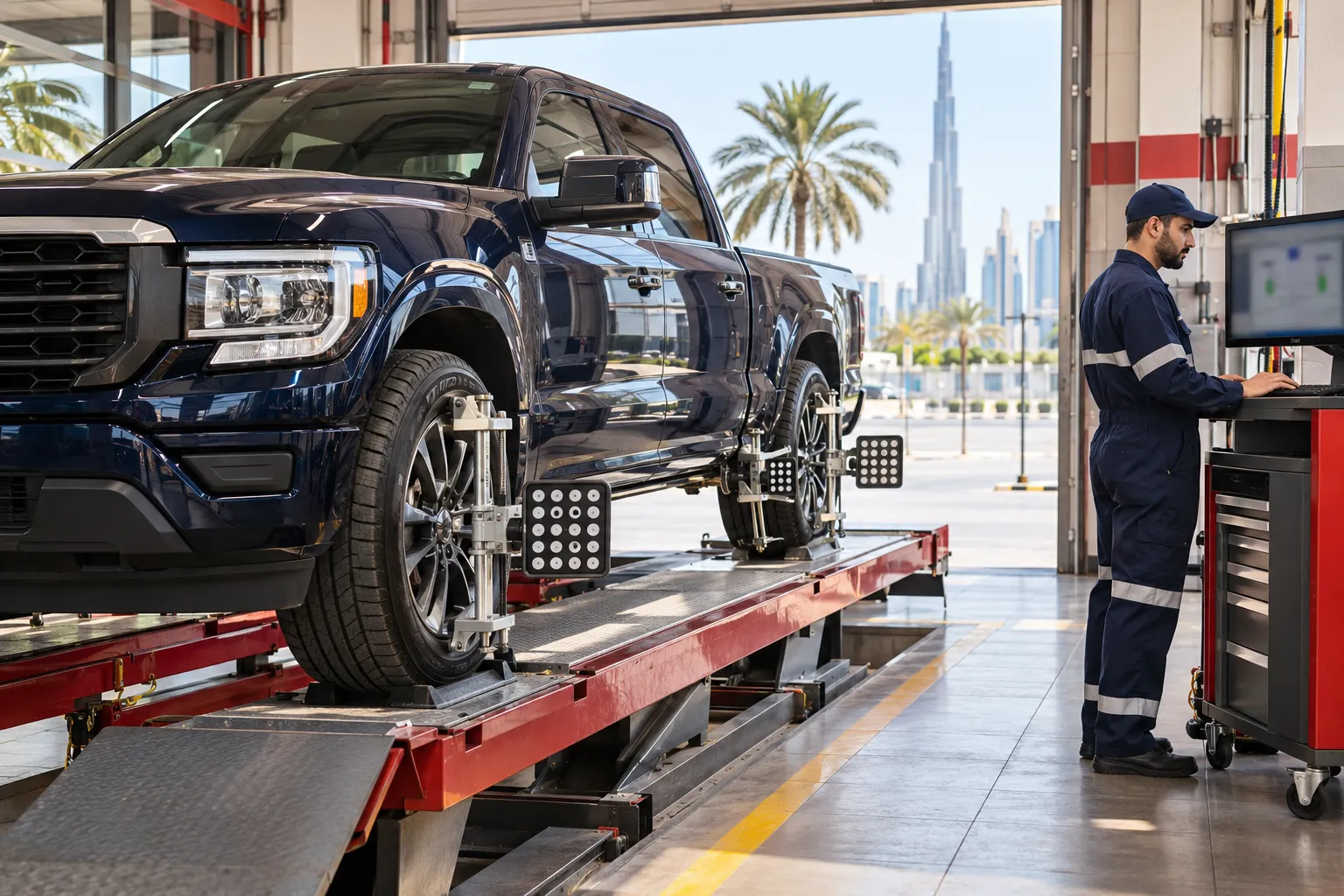
Short answer
The clearest signs you need a wheel alignment are the car pulling to one side, a steering wheel that sits off-centre when driving straight, and tyres wearing faster on one edge. If you notice any of these, or you've hit a kerb or pothole hard, get the alignment checked within a week.
Key takeaways
- Pulling, an off-centre steering wheel and edge wear on the tyres are the three classic signs.
- A hard hit on a kerb, speed bump or pothole can knock alignment out in a single moment.
- Vibration at speed is usually a balancing problem, not alignment, though both can appear together.
- Get alignment checked after new tyres, suspension or steering work.
- Poor toe alignment can scrub a new tyre's shoulder down in a few thousand kilometres.
You need a wheel alignment if your car pulls to one side on a straight, flat road, if the steering wheel sits crooked while you’re driving straight, or if your tyres are wearing faster on the inside or outside edge. Those three are the most reliable signs. Add a squeal on gentle turns, a loose or wandering feel on the highway, and any hard hit on a kerb or pothole, and you have the full list. If you spot one of them, book a check within the week, before it eats into your tyres.
I’m Hassan Faaz, and over eight years of tyre work in the UAE I’ve seen bad alignment ruin more new tyres than punctures do. Here are the seven signs I look for, and what each one means.
A quick word on what alignment is
Alignment is the angle of each wheel relative to the car and the road. There are three main angles:
- Toe: whether the fronts of the tyres point slightly inwards or outwards when seen from above. Toe errors cause the fastest tyre wear.
- Camber: how much the top of the tyre leans in or out when seen from the front. Too much camber wears one edge.
- Caster: the angle of the steering axis seen from the side. It affects straight-line stability and how the steering returns to centre.
Factory settings are tight. A few millimetres of toe error is enough to scrub a tyre shoulder bald.
The 7 signs
1. The car pulls to one side
Let go of the wheel briefly on a straight, flat stretch, somewhere quiet and safe. If the car drifts consistently left or right, alignment is the first suspect. Be fair to it, though: UAE roads have a camber for drainage, so a slight drift towards the kerb can be normal. Try it in both lanes. A pull that stays the same in both directions is real.
Uneven tyre pressure and a dragging brake caliper can also cause pulling, so I always check pressures first.
2. The steering wheel is off-centre
If the logo on your steering wheel sits at an angle when the car is going straight, the toe settings are out, or the steering was centred wrongly after previous work. This is very common after someone has replaced a tie rod end or a steering rack without doing an alignment afterwards.
3. Uneven tread wear
This is the sign I trust most because tyres don’t lie. Look at the tread across the width:
| Wear pattern | Likely cause |
|---|---|
| Inner edge worn | Negative camber or toe-out |
| Outer edge worn | Positive camber, toe-in or hard cornering |
| Feathered edges (smooth one way, sharp the other) | Toe out of spec |
| Centre worn | Over-inflation, not alignment |
| Both edges worn | Under-inflation, not alignment |
| Patchy, cupped dips | Worn shocks or imbalance |
Inner-edge wear is the sneaky one. You can’t see it without kneeling down, and by the time customers notice, the steel belt is sometimes showing. I’ve found this many times on Land Cruisers and Patrols that have been lifted or lowered without proper alignment.
4. Squealing tyres at low speed
If your tyres squeal on gentle turns in a car park, not just on fast corners, the toe may be out and the tyres are being dragged sideways. Basement car parks with painted, smooth floors make this obvious.
5. A loose or wandering feel on the highway
If the car needs constant small corrections to stay in lane on the E311 or Sheikh Zayed Road, check caster and toe. Worn steering or suspension parts can cause this too, which is why a good alignment job starts with a check of the bushes, ball joints and tie rod ends.
6. You’ve hit something hard
One hard hit is enough. In Dubai and Sharjah the usual culprits are speed bumps taken too fast, high mall kerbs, potholes in older districts, and debris near construction sites. If you heard a bang and the car feels different afterwards, check alignment and inspect the tyre and rim for damage. Our guide to tyre damage causes explains what to look for on the sidewall.
7. You’ve just had new tyres or suspension work
New tyres are the best time to align. If your old tyres wore unevenly, the alignment was the reason, and new tyres will go the same way. Any work on shocks, springs, control arms or steering parts also changes alignment. A customer in Al Barsha last year fitted four new tyres without an alignment. Five months later the front inner shoulders were almost gone. The tyres had been fine; the toe setting hadn’t.
Alignment or balancing?
People often book alignment when they need balancing, and the other way round.
- Vibration through the steering wheel at 100 to 120 km/h is usually wheel imbalance or a bent rim. That’s a job for wheel balancing.
- Pulling, crooked steering and edge wear point to alignment.
Sometimes you need both. We check for both on every visit because the test drive tells us a lot.
How rotation fits in
Rotating your tyres regularly hides alignment problems for a while, because each tyre spends time on a different corner. That’s useful for tyre life, but it means you should check the tread closely at every rotation. My post on how often to rotate your tyres covers the timing.
What happens if you ignore it
Bad alignment rarely causes a sudden failure, but it does three things:
- Shortens tyre life. A tyre that should last 40,000 km can be finished in half that.
- Makes the car tiring to drive. Constant correction on long trips to Abu Dhabi or Ras Al Khaimah adds up.
- Reduces grip at the edge of the tread. A worn shoulder gives less grip when you swerve or brake hard in a turn.
If the tyres are already too worn, alignment can’t fix them. When the tread is down to 1.6 mm, or the steel belt shows, the tyre needs replacing. Our tyre replacement service starts from AED 189 per tyre, fitted, and we’ll align afterwards so the new set lasts.
What alignment costs with us
Our wheel alignment service starts from AED 99 per car. The final price depends on whether the car needs front-only or four-wheel adjustment, on the make (some European and lifted 4x4 setups take longer), and on whether seized adjusters need freeing. If a part is bent or worn, we’ll show you before doing anything else. Common models like Toyota are straightforward, and our Toyota tyre page lists the sizes we stock for them.
How to check at home in five minutes
You don’t need any tools for a first check:
- Park on flat ground with the steering straight.
- Look at the steering wheel. Is the logo level?
- Kneel at each front tyre and run your palm across the tread from inside to outside, then back. If it feels smooth one way and rough the other, that’s feathering from a toe problem.
- Compare the inner and outer edges. Use a coin or a tread depth gauge if you have one.
- Look down the side of the car from the front. Does either wheel lean in or out more than the other?
None of this replaces a measurement on proper equipment, but it tells you whether it’s worth booking.
When to call us
If your steering wheel is crooked, the car pulls, or you’ve seen one edge of a tyre wearing faster than the other, don’t wait for the next service. Get the alignment checked and the tyres inspected at the same time. Get in touch with your car model and what you’ve noticed, and we’ll tell you what to expect before we arrive.
Frequently asked questions
How often should I get a wheel alignment in the UAE?
Have it checked once a year or every 10,000 to 15,000 km, and straight away after a hard kerb or pothole impact. Many cars hold alignment well for longer, but UAE speed bumps and kerbs knock it out more often than people expect.
How much is a wheel alignment in Dubai?
Our wheel alignment starts from AED 99 per car. The final price depends on the car, whether it needs front-only or four-wheel adjustment, and whether seized adjusters need extra work.
Can bad alignment cause vibration?
Usually not on its own. Vibration at 100 to 120 km/h is normally a wheel balancing issue or a bent rim. Bad alignment more often shows up as pulling, a crooked steering wheel and uneven tread wear.
Do new tyres need an alignment?
It is strongly recommended. If the old tyres wore unevenly, the alignment caused it, and the new tyres will wear the same way unless it's corrected.
Is it safe to drive with bad alignment?
For a short time, mostly yes, but the car is harder to keep straight and the tyres wear out early. If the pull is strong or appeared suddenly after an impact, get it checked quickly in case something is bent.
Keep reading
Stuck with a puncture right now?
Send your location on WhatsApp. A technician confirms the price and heads out, usually within 30–45 minutes in central Dubai.