Tyre Care
Tyre Age and Expiry in the UAE
Short answer
In the UAE, treat about five years from the manufacture date as the practical limit for car tyres, even if the tread looks fine, and never keep a tyre beyond ten years. Read the age from the last four digits of the DOT code on the sidewall, and remember the spare ages too.
Key takeaways
- Tyres age from the day they are made, not the day they are fitted, so check the DOT date before you buy.
- In UAE heat I recommend replacing tyres at around five years from manufacture, even with good tread.
- Tyre and car makers widely advise that no tyre should stay in service beyond ten years.
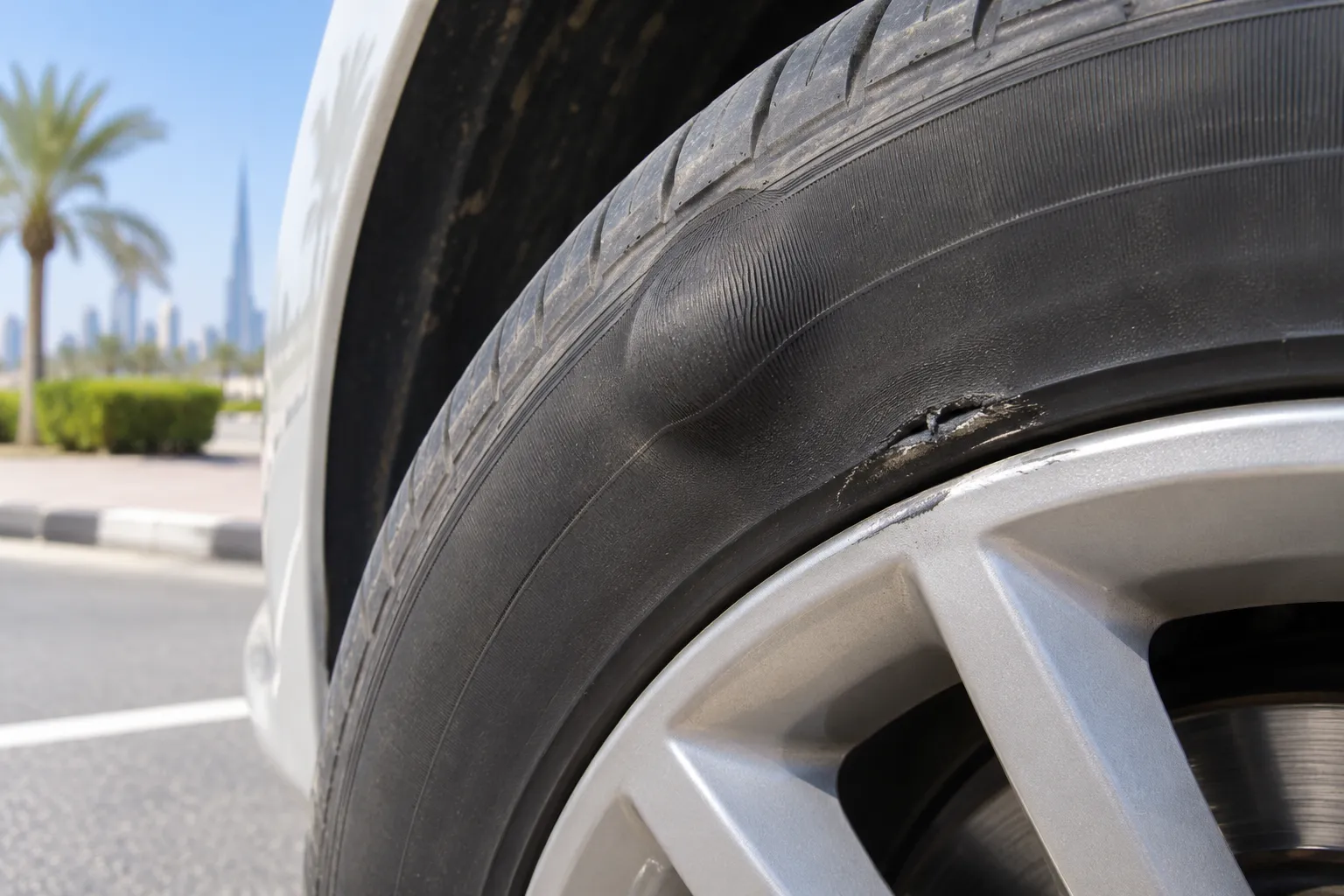
- Sidewall cracking, hardening and bulges are signs of ageing that mean replacement regardless of date.
- Spare tyres age even if never used; check the spare's DOT code too.
In the UAE, plan to replace your car tyres at about five years from the manufacture date, even if the tread still looks good, and never keep a tyre in service beyond ten years. You find the age in the DOT code on the sidewall: the last four digits are the week and year it was made, so 1223 means week 12 of 2023. Heat and sunlight age rubber faster here than in cooler countries, so the date matters as much as the tread depth.
Age is the tyre fact people know least about. Customers often tell me their tyres are “nearly new” because they’ve done 15,000 km. Then I read the DOT code and they’re six years old.
Why tyres age even when you don’t drive
Tyre rubber is a blend of natural and synthetic rubbers, carbon black, oils and chemicals that protect it from oxygen and ozone. Over time those protective chemicals are used up. The rubber gets harder, loses flexibility and starts to crack. Inside, the bond between the rubber and the steel belts weakens.
That happens on the car, in the boot as a spare, and on a warehouse shelf. Heat speeds the chemistry up. UV light from direct sun attacks the surface. Ozone, which is higher on hot, sunny days, adds to it.
In Dubai, Sharjah and Abu Dhabi, a tyre spends months a year above 40°C ambient, on roads at 60 to 70°C, with strong UV whenever the car is parked outside. That is close to the worst case for rubber ageing.
How to read your tyre’s age
Look on the sidewall for “DOT” followed by a string of letters and numbers. The last four digits, often in an oval, are the date.
| DOT ending | Made in | Age in November 2026 |
|---|---|---|
| 4625 | Week 46, 2025 | About 1 year |
| 1024 | Week 10, 2024 | About 2 years 8 months |
| 3022 | Week 30, 2022 | About 4 years 4 months |
| 0521 | Week 5, 2021 | Nearly 6 years, replace |
| 2716 | Week 27, 2016 | Over 10 years, replace now |
If you only see a partial code, look on the other side of the tyre. The full code is often only on one face. My guide on reading your tyre size and DOT code has photos of where it sits.
How long tyres should last by age
There’s no single rule, so here is what I follow and recommend:
- 0 to 3 years: normal life. Check pressures, tread and sidewalls as usual.
- 3 to 5 years: inspect closely at every service. Look for cracks in the sidewall and between tread blocks, especially if the car lives outside.
- Around 5 years: in UAE conditions, I recommend replacing, even with tread left.
- Up to 10 years: the widely quoted absolute maximum from tyre and vehicle makers, intended for cooler climates and in any case not to be exceeded.
You’ll often hear that tyres “expire after five years” in the UAE. Regional standards and a lot of local workshops do treat the manufacture date seriously, and some sellers won’t fit tyres beyond a certain age. Rules and how they’re applied can change, so if it matters for a sale or registration, check with the seller or testing centre. From the tyre’s point of view, five years in this climate is a sensible limit.
For how tread wear and age combine, see how long tyres last in the UAE heat.
Signs your tyres are ageing
You don’t need the date to spot an old tyre. Look for:
- Fine cracks on the sidewall, near the rim, or in the grooves. Surface crazing is the first stage.
- Deeper cracks you can catch a fingernail in. Replace.
- Hard, shiny rubber that no longer feels slightly soft when you press it.
- Bulges or bubbles on the sidewall, which mean the internal structure has failed.
- Vibration at speed that wasn’t there before, sometimes from internal belt separation.
- Discolouration: a brown or grey look on the sidewall from oxidation.
Cracking and bulging are both covered in our guide to tyre damage causes.
The spare wheel problem
The spare is usually the oldest tyre on the car. It’s often the original from the factory and has never been driven. Under the boot floor of an SUV parked outside in August, it gets very hot.
Last year I went to an Abu Dhabi customer near Khalifa City with a flat on a 2014 Pajero. The spare had never been used. The DOT code said 2013. When I took it out, the sidewall had cracks all round the rim. I wouldn’t put it on for more than a slow drive to a shop. We fitted a new tyre instead.
Check your spare’s date every time you check the other four. If it’s a space-saver, the same ageing rules apply. Our article on space-saver versus full-size spares explains the other limits. We cover Abu Dhabi as well as Dubai and Sharjah if your spare needs replacing.
Buying tyres: check the date first
The age clock starts at the factory. A tyre that has sat for two or three years in a hot container or warehouse has already used part of its life.
- Ask the seller for the DOT date before you agree to the price.
- Aim for tyres made within the last 12 months.
- Check all four tyres, not just one. Sets can come from different batches.
- When buying online, ask for photos of the actual DOT codes.
- Be cautious with deals that look too good. Old stock is a common reason.
When we supply new tyres, we tell you the manufacture date before fitting.
How to slow tyre ageing
You can’t stop it, but you can slow it down:
- Park in shade. Basement, covered parking, or a car port. A sunshade for the tyres isn’t silly if the car sits outside for weeks.
- Keep pressures correct. Underinflated tyres flex and heat up more, which speeds ageing.
- Avoid tyre shine products with solvents. Water-based dressings are fine. Petroleum-based ones can harm the rubber.
- Drive the car. Tyres that sit still for months develop flat spots and age unevenly.
- Store spare sets properly. Cool, dark, dry, away from motors and AC units.
Why “plenty of tread” can be misleading
A tyre with 6 mm of tread and a 2019 DOT code looks better than a tyre with 3 mm made last year. It often isn’t. The tread depth tells you how much rubber is left to wear. It tells you nothing about how flexible that rubber still is or how well it is bonded to the steel belts underneath.
Hardened rubber grips less, particularly on the dusty, slightly oily surface you get on Dubai roads after the first rain of winter. It also cracks more easily when it hits a pothole or a kerb. When I’m deciding whether to recommend replacement, I look at the date, the sidewalls and the tread together, never the tread alone.
When to call us
If your tyres are more than four or five years old, or you can’t find the date, ask us to check them. We’ll read all the DOT codes including the spare, inspect for cracking and bulges, and give you an honest view on whether to replace now or later. Book a visit through the contact page.
Frequently asked questions
Do tyres expire in the UAE?
Tyres do not carry a printed expiry date, but their rubber ages with time and heat. In practice most workshops and drivers here treat around five years from the manufacture date as the time to replace, and you should check current requirements with the seller or your vehicle testing centre.
How do I check the age of my tyres?
Find the code starting with DOT on the sidewall and read the last four digits. The first two are the week and the last two are the year, so 3824 means week 38 of 2024.
Is it safe to buy tyres that are two years old?
A two-year-old tyre stored correctly is not dangerous, but it has already used part of its useful life in this climate. Ask for tyres made within the last year, especially if you want them to last five years on the car.
Do unused tyres age?
Yes. The rubber compound breaks down with time, heat and oxygen whether the tyre is driven or not. A spare that has never touched the road can still be too old to trust.
Can old tyres pass the vehicle inspection in the UAE?
Inspection centres check tyre condition, and visibly cracked, damaged or worn tyres can fail. Requirements can change, so if your tyres are old, have them checked before the test.
Keep reading
Stuck with a puncture right now?
Send your location on WhatsApp. A technician confirms the price and heads out, usually within 30–45 minutes in central Dubai.